By Florissa — A fictional world trip
Hello! I'm Florissa and this is my fictional journey across five incredible countries in Asia and Oceania.
🎵 K-pop fan editionThe destinations


Hi, my name is Florissa! I'm a huge K-pop fan and I created this website as part of my English assignment, where I imagine a fictional trip around the world.
I chose countries that are close to my heart — especially South Korea, the home of K-pop. I hope you enjoy exploring each destination as much as I enjoyed writing about them!
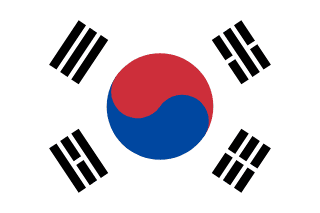
Where ancient palaces meet K-pop dreams
The moment I landed in Seoul, I felt like I had stepped into a music video. Everything sparkled — the lights of Gangnam, the street food stalls in Myeongdong, the giant screens showing K-pop performances. I kept pinching myself.
I visited Gyeongbokgung Palace at sunrise. The mist hung low over the stone courtyard and it felt like centuries had melted away. Right outside the palace gate, a K-pop fan shop was already opening. That contrast was so perfectly Seoul.
On my last evening I stumbled onto a small outdoor stage where a rookie group was performing for a crowd of screaming fans. I stayed until the lights went out. Best night of the entire trip.
South Korea is a mountainous country where about 70% of the land is covered in forested hills. The seasons are vivid: cherry blossoms in spring, lush green rice fields in summer, fiery red-and-orange forests in autumn, and snow-dusted mountain peaks in winter. The coastline is dotted with scenic islands, and Jeju Island — a UNESCO Biosphere Reserve — is a volcanic gem in the south.
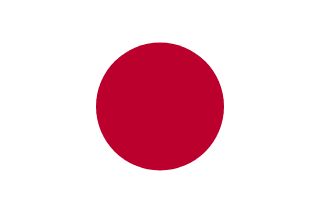
Where silence and chaos exist side by side
Arriving in Japan, everything felt completely different from home. The lights, the speed of the city and the silence of the temples all seemed unreal — like walking into two worlds at once.
In Tokyo I stood in the middle of Shibuya Crossing. Hundreds of people moved in every direction, yet somehow it was perfectly orderly. I felt small but incredibly alive.
The most magical moment was seeing Mount Fuji from the shore of Lake Kawaguchiko at dawn. It looked like a painting, and I just stood there completely still, watching the light change over the water.
Japan is made up of thousands of islands — predominantly mountainous, with volcanic peaks, dense forests and dramatic coastlines. About 73% of the land is uninhabited forest and mountain. Despite this, Japan is also home to some of the world's most densely populated and technologically advanced cities, creating a striking contrast between wild nature and modern urban life.
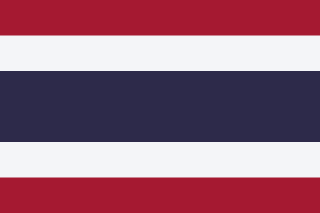
The land of smiles, gold and jungle
Thailand overwhelmed all my senses at once. The heat, the noise of tuk-tuks weaving through traffic, the smell of lemongrass and chilli drifting from every alley — I was completely in love from the very first minute.
At Wat Pho temple, I stood before the enormous golden reclining Buddha and felt genuinely small. The gilded tiles, the orange robes of monks, and the soft ring of prayer bells made everything feel sacred and dreamlike.
On Koh Samui I swam in water so clear and warm it didn't seem real. Watching the sky turn red and purple over the sea while eating fresh mango sticky rice — honestly one of the best moments of my life.
Thailand has an incredible variety of landscapes: tropical rainforests in the north, wide rice plains in the central region, and limestone islands with white sand beaches in the south. The country has two coastlines — the Gulf of Thailand and the Andaman Sea — and over 1,400 islands. The north is lush and cool; the south is tropical and warm all year round.
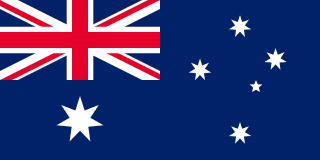
The continent at the edge of the world
Australia started with Sydney Harbour at golden hour — the Opera House glowing white against a deep blue sky, the Harbour Bridge reflected in the water below. It felt like a postcard come to life.
But nothing prepared me for the Outback. I drove for hours without seeing a single tree or building. Then Uluru appeared — a giant red monolith rising from the flat earth, glowing like an ember as the sun set. I sat in silence and felt the weight of 65,000 years of history.
Snorkelling on the Great Barrier Reef was like visiting another planet. The colours, the coral, the fish — things so beautiful they almost made me cry underwater. Almost.
Australia is the sixth-largest country in the world and the driest inhabited continent. The interior is dominated by desert and semi-desert — the legendary Outback — while the coasts offer tropical rainforests, coral reefs, white sand beaches and fertile farmlands. Around 80% of its plant and animal species exist nowhere else on Earth, making it one of the most biologically unique places on the planet.
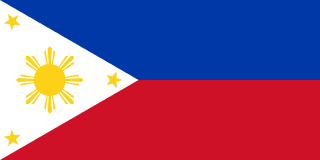
7,641 islands of endless adventure
The Philippines was the most unexpected surprise of my whole trip. Manila hit me with colour, noise, jeepneys painted like moving artworks, and the warmth of people who genuinely seem happy to see you.
In Palawan, I took a boat into the Underground River — a UNESCO World Heritage site where you float in darkness between enormous stalactites, surrounded only by the sound of dripping water and your guide's lamp. Surreal and unforgettable.
El Nido was the absolute highlight. Above the water: limestone cliffs draped in jungle. Below: an explosion of coral and colour. I floated for an hour and didn't want to leave. Ever.
The Philippines is an archipelago of 7,641 islands surrounded by the South China Sea, the Pacific Ocean and the Celebes Sea. The country is home to tropical rainforests, active volcanoes, ancient rice terraces and some of the most biodiverse seas in the world — sitting at the heart of the Coral Triangle. Typhoons are a regular seasonal phenomenon, making the islands both dramatic and unpredictable in equal measure.